
Old Farts Fiddling: Hand-Carved Stories from the Whitsundays
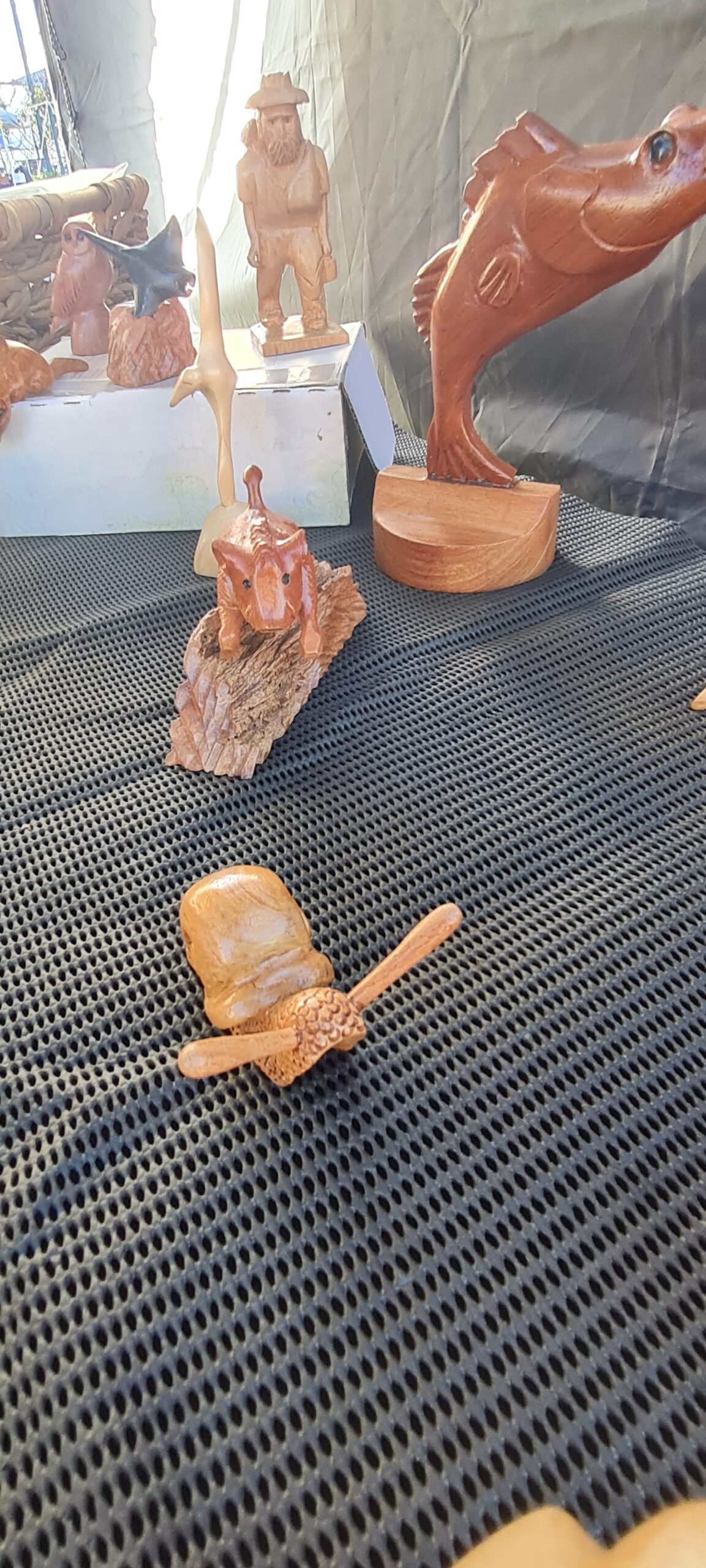
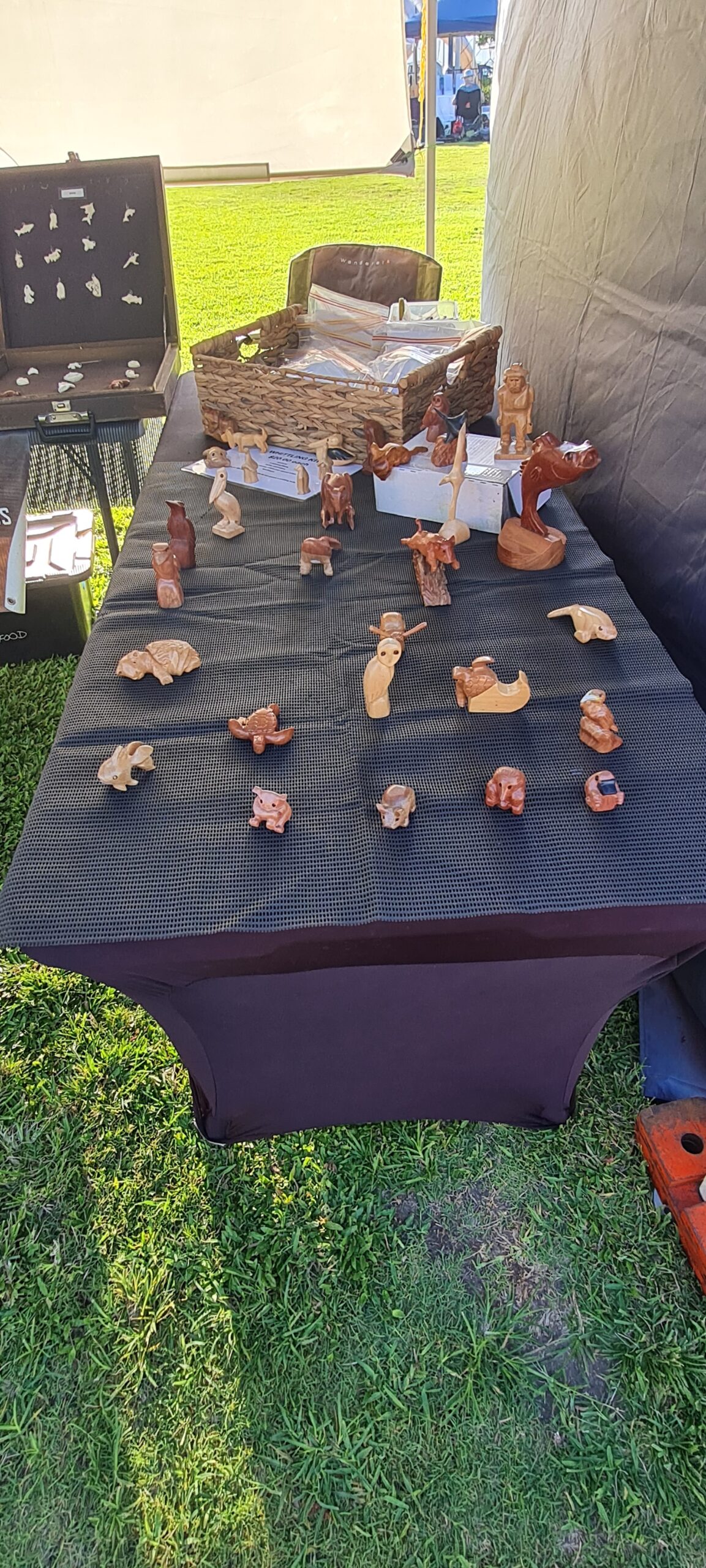
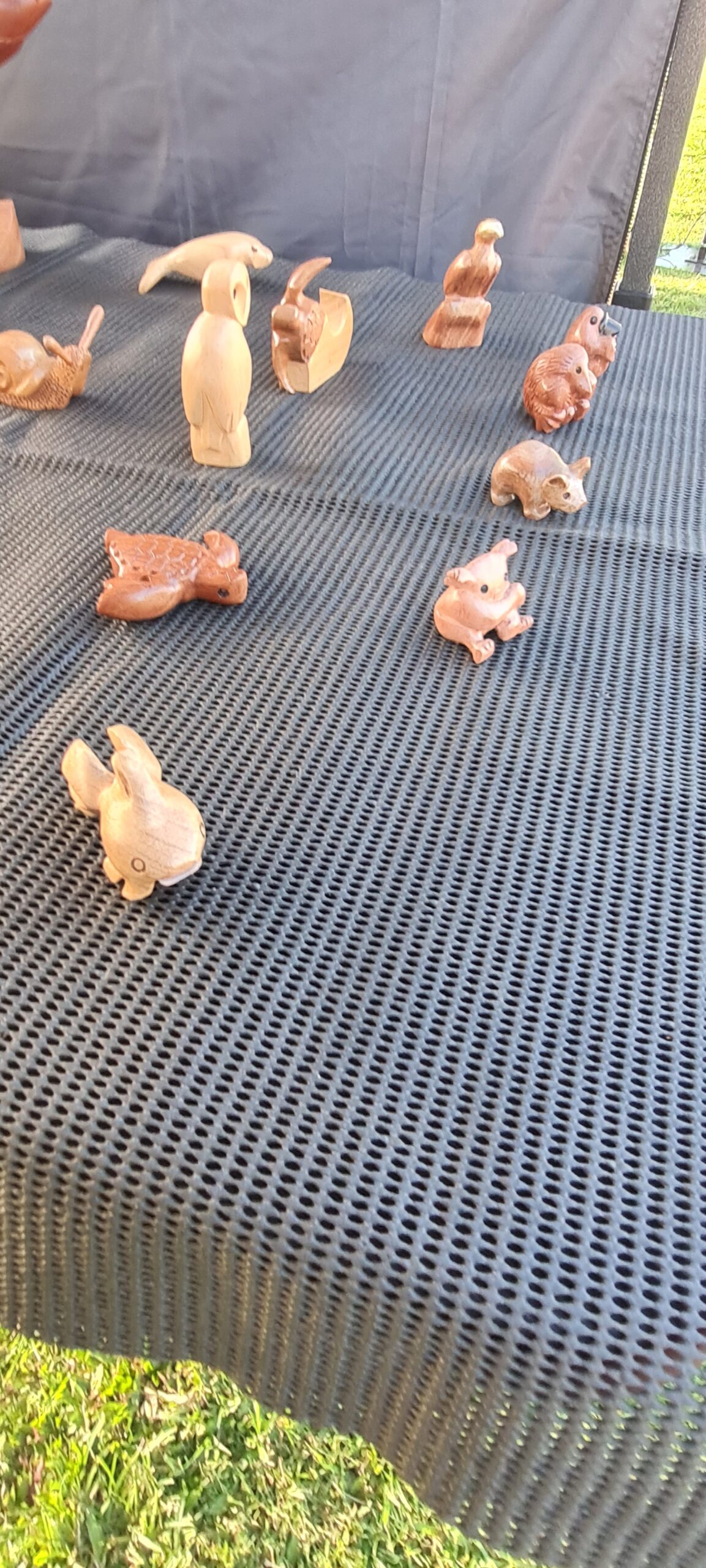
Old Farts Fiddling was created after Mal discovered a passion for bone carving during a half-day workshop in New Zealand. The business name itself has a humorous origin: the “missus” (Dawn) told Mal to either build an extra room to house the carvings or sell them at the market – the market, being the cheaper option, has been their home for 10 years.
While bone carving remains central, whittling has started to overtake the carvings, with whatever pops into Mal’s head appearing on the table. Dawn, an emerging artist, complements the stall with her original artwork.
The market has been essential for Mal and Dawn, providing an opportunity to earn a living within certain physical restrictions. They also value the lively social aspect, developing relationships with fellow marketeers and regular visitors.
Through these relationships, they have:
- Obtained commissions.
- Been able to give back to the community.
- Developed a sideline of whittling workshops.
The market serves as a proving ground for their artworks, allowing them time to explore subject matter, develop new skills, learn about various mediums, and gain confidence.
Mal and Dawn’s craftsmanship is intricate and time-intensive.
For bone carvings, the bone is sourced locally from Kuttabul. A lengthy process is required to prepare it for use. The design process often occurs at night in front of the TV, and the actual carving of a single piece can take up to eight hours.
Wood Whittling fits well with the same design process. While sourcing local woods can be time-consuming, whittling can be done directly at the market and finished off at home.
Dawn’s artwork is new and developing through study, support from other artists, and exploration. The market provides Dawn with the opportunity to test artworks in a friendly and supportive environment.
The Tradition of the Carving
While the business is local to the Whitsundays, the craft of bone carving is a traditional Māori craft. Traditionally, the material used was whale bone or Pounamu (NZ Jade).
Many of the carvings carry a traditional meaning: The Whale tail, for example, is believed to gift the wearer with power and strength.
It is traditionally believed that the carving absorbs a bit of the wearer’s spirit, so when it is passed down, the new wearer carries that spirit with them.
By sharing these carved pieces, Mal and Dawn share a craft rich in cultural meaning and tradition. They are a beloved fixture at the market, offering unique pieces that tell stories both ancient and new.